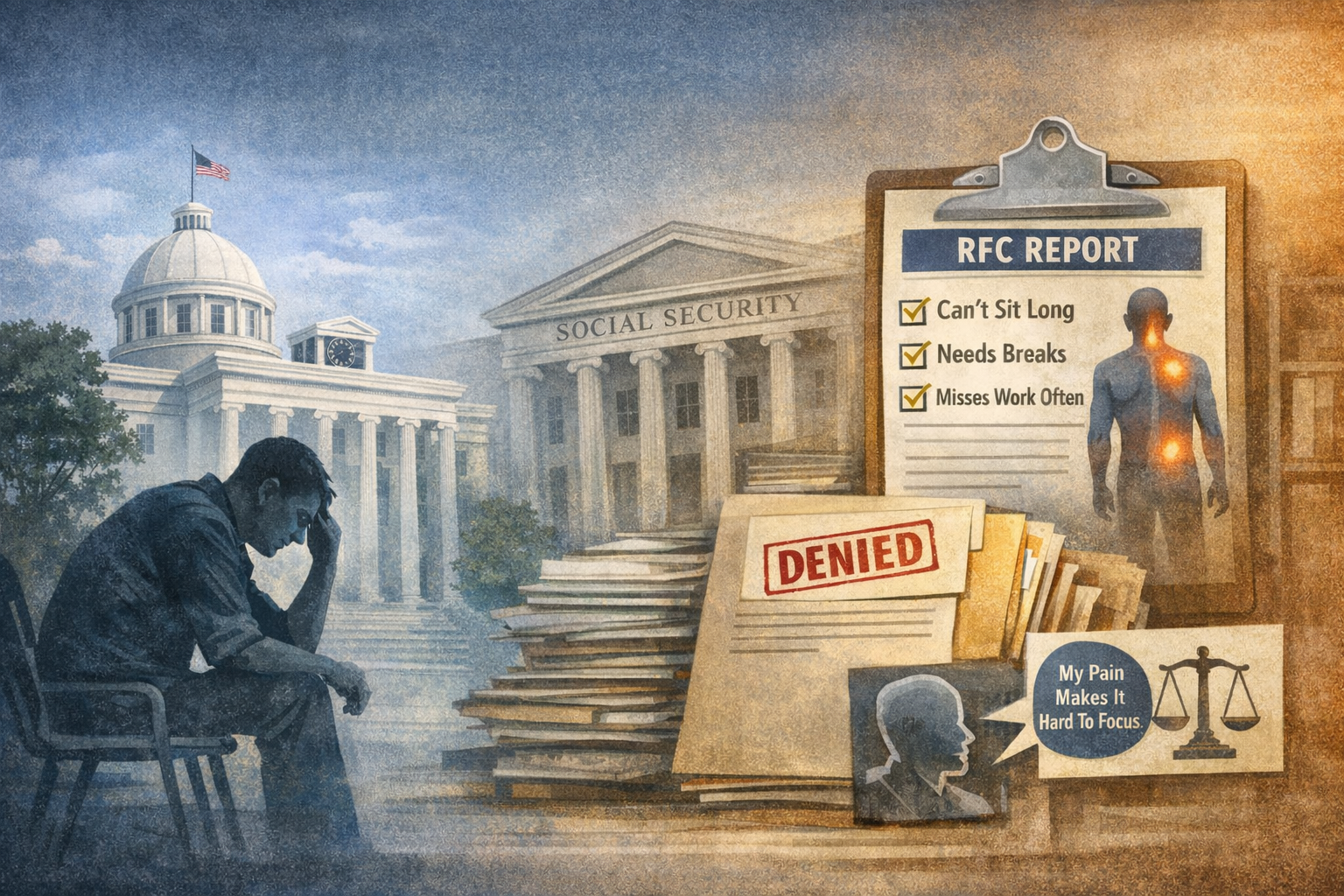
If you’ve opened your Social Security Disability denial letter and felt confused, frustrated, or defeated - you’re not alone.
Every year, thousands of people in Alabama apply for Social Security Disability benefits, only to receive a denial notice from the Social Security Administration (SSA).
The truth is this:
most disability claims are denied at first, even when the applicant is genuinely disabled.
A denial does
not mean you don’t qualify. It means the SSA believes - based on what they reviewed - that you didn’t meet their strict legal standards
at that stage. Understanding why your claim was denied is the first step toward winning your appeal.
Below, we’ll break down:
- What your SSA denial letter is really saying
- The most common reasons disability claims are denied in Alabama
- The difference between
reconsideration and a
disability hearing
- Why appealing alone puts your case at risk
First Things First: A Disability Denial Is Extremely Common
If you’re feeling discouraged, here’s something important to know:
More than half of all initial Social Security Disability applications are denied.
In Alabama, approval rates at the initial application stage are often
below the national average. That doesn’t reflect the strength of your case - it reflects how demanding SSA’s rules are and how often applications lack the evidence SSA wants to see.
Many strong cases are denied simply because:
- Medical records were incomplete
- SSA misunderstood how a condition affects daily function
- Forms were filled out incorrectly
- A doctor didn’t clearly explain work limitations
This is why appeals exist and why understanding your denial letter matters.
How to Read Your Disability Denial Letter (What SSA Is Really Saying)
Your denial letter may feel vague or overly technical, but it almost always falls into one (or more) of these categories.
1. “Your Condition Is Not Severe Enough”
This is one of the most common denial reasons.
SSA isn’t saying you aren’t sick or injured. They’re saying:
- Your condition is
not severe enough to prevent all substantial work, or
- They believe you could still work in some capacity
SSA uses a strict legal definition of disability. To qualify, your condition must:
- Be expected to last at least 12 months or result in death
- Prevent you from performing substantial gainful activity
If SSA believes you could work a lighter job or different job - even hypothetically - they may deny your claim.
2. “You Can Still Do Other Work”
This denial often surprises people.
SSA may agree you
cannot return to your past job, but still deny benefits because they believe:
- You could adjust to other work based on your age, education, and skills
This is especially common for:
- Younger applicants
- People with some college or transferable job skills
The problem? SSA often makes this decision without fully understanding how your symptoms actually affect you day-to-day.
3. “You Are Not Following Prescribed Treatment”
SSA may deny a claim if they believe:
- You are not following recommended medical treatment
- Your condition could improve if you did
But this doesn’t account for real-life barriers like:
- Inability to afford treatment
- Side effects from medications
- Lack of access to specialists in rural Alabama areas
These issues can - and should - be explained during an appeal.
4. “There Is Not Enough Medical Evidence”
This is a
huge reason claims are denied.
SSA only decides cases based on
documentation, not personal statements alone. If your records don’t clearly show:
- Diagnoses
- Objective findings
- Functional limitations
SSA may conclude there isn’t enough proof - even if you see doctors regularly.
Missing records, vague doctor notes, or outdated tests can all hurt your case.
5. “Your Condition Is Expected to Improve”
SSA may believe:
- Your condition is temporary
- You will recover within 12 months
This often happens with:
- Surgeries
- Injuries
- New diagnoses
However, many conditions worsen over time or fail to improve as expected. Appeals allow you to show the
full picture.
What Happens After a Disability Denial in Alabama?
After a denial,
you have 60 days to appeal. Missing this deadline usually means starting over.
There are two main appeal stages most people encounter:
Reconsideration: The First Appeal Level
What Is Reconsideration?
Reconsideration is a formal request for SSA to review your claim again.
A different claims examiner will look at:
- Your existing file
- Any
new medical evidence you submit
Why Reconsideration Often Fails
In Alabama, reconsideration approval rates are still relatively low. That’s because:
- The same rules are applied
- No hearing is held
- No testimony is taken
Many reconsideration denials happen because applicants don’t know
what evidence is missing or
how to fix weaknesses in the file.
The Disability Hearing: Where Many Cases Are Won
What Is a Disability Hearing?
If reconsideration is denied, the next step is a hearing before an
Administrative Law Judge (ALJ).
This is the most important stage of the process.
At a hearing:
- You can testify about your limitations
- A judge reviews your full medical history
- Medical and vocational experts may testify
- Your ability to work is examined in detail
Why Hearings Matter
Judges are not bound by the earlier denials. They:
- Ask real questions
- Consider credibility
- Evaluate how conditions affect daily life
This is where
experienced legal representation makes a major difference.
Why Appealing Alone Can Hurt Your Disability Case
Many people try to handle appeals on their own - and unintentionally damage their chances.
Common mistakes include:
- Submitting incomplete medical records
- Missing deadlines
- Failing to explain functional limitations
- Not knowing how SSA evaluates work capacity
- Being unprepared for vocational expert testimony
Disability law is highly technical. One missed detail can cost months - or years - of benefits.
Why Having an Alabama Disability Lawyer Matters
Social Security Disability is federal law, but
local experience matters.
An Alabama disability attorney understands:
- Local hearing offices and judges
- Common SSA denial patterns in Alabama
- How medical providers document disability
- How to build strong appeals from the ground up
A lawyer can:
- Identify why your claim was denied
- Gather targeted medical evidence
- Prepare you for testimony
- Cross-examine SSA experts
- Present your case clearly and persuasively
Denied Disability Benefits? Don’t Give Up - and Don’t Appeal Alone
A denial letter is not the end of your case. For many people in Alabama, it’s just the beginning of the process that ultimately leads to approval.
The key is
knowing what your denial really means - and taking the right next step.
If your disability claim has been denied, or if you’re thinking about applying and want to do it right the first time, experienced legal guidance can make all the difference.
Don’t appeal alone. Get help from a disability lawyer who focuses exclusively on helping Alabama residents navigate Social Security Disability claims and appeals.