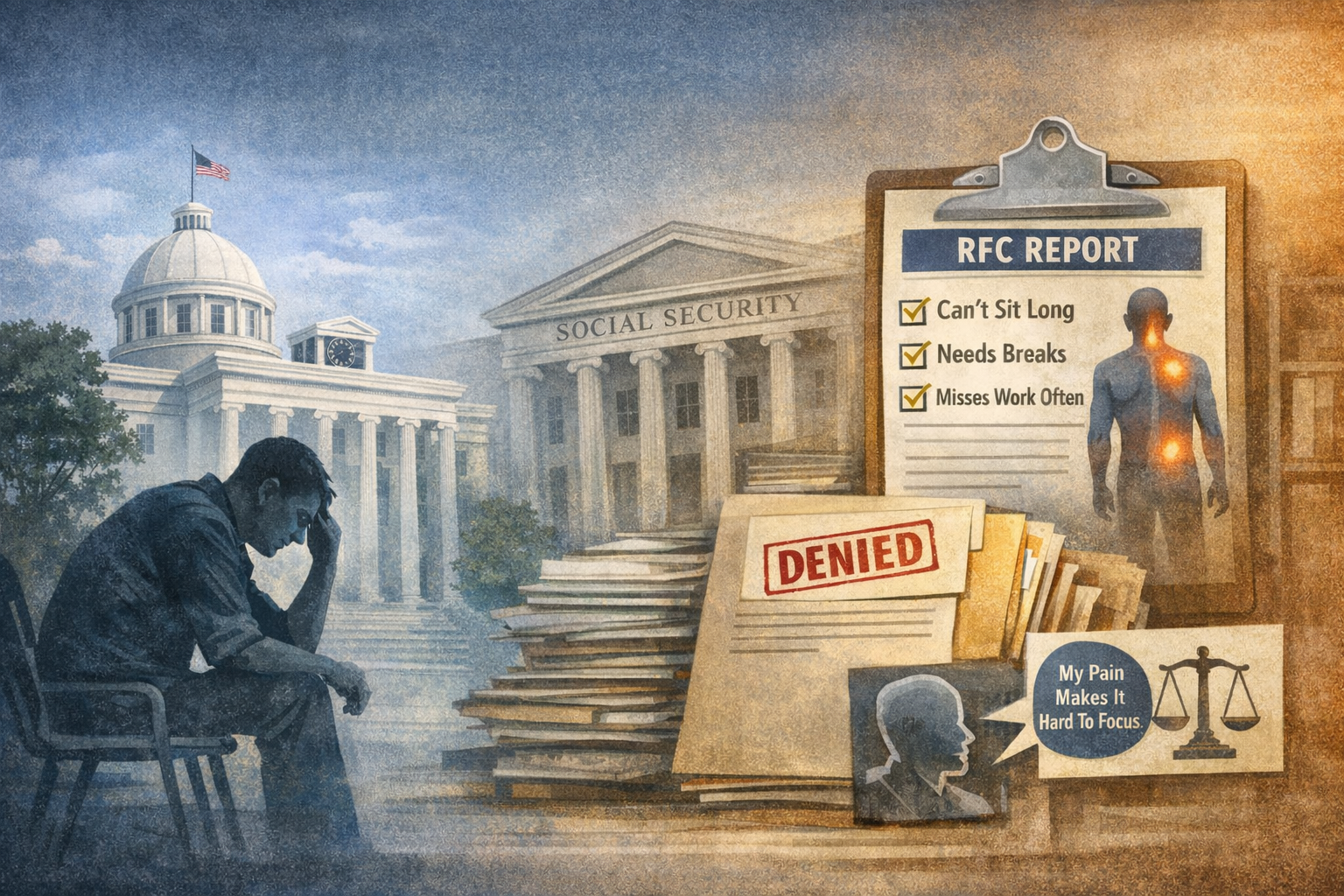
If you’ve applied for Social Security Disability benefits in Alabama and received a denial letter, you are not alone.
In fact, most disability claims in Alabama are denied the first time.
For many applicants, that initial denial feels devastating. You may be unable to work. Bills may be piling up. Your health may be worsening. And now the Social Security Administration (SSA) is telling you that you don’t qualify.
Here’s the truth:
An initial denial is common - and it is often not the final outcome.
Understanding why most claims are denied and why appeals are frequently successful can help you move forward with confidence.
How Often Are Disability Claims Denied in Alabama?
Across the country, a majority of initial Social Security Disability (SSDI and SSI) applications are denied. In Alabama, approval rates at the initial level are often even lower than many applicants expect.
That does not mean:
- You are not disabled
- Your condition isn’t serious
- You don’t qualify under the law
It means the SSA applies a strict, technical definition of disability - and many initial applications don’t fully meet their documentation standards.
Why Most Alabama Disability Claims Are Denied the First Time
There are consistent patterns behind initial denials. Here are the most common reasons.
1. Lack of Sufficient Medical Evidence
This is the number one reason claims are denied.
The SSA does not approve cases based on how much pain you’re in or how sincere you are. They approve claims based on
medical documentation.
If your file does not clearly show:
- A diagnosed medical condition
- Objective findings (MRIs, lab work, clinical exams)
- Specific functional limitations
- Ongoing treatment
Your claim may be denied - even if you truly cannot work.
Many applicants assume SSA will “get all the records.” In reality:
- Records may be incomplete
- Doctors’ notes may lack detail
- Critical test results may be missing
Without strong documentation, the examiner may conclude you can still work.
2. The SSA Believes You Can Do Other Work
Even if SSA agrees you cannot return to your previous job, they may deny your claim if they believe you can perform other work.
SSA evaluates:
- Your age
- Education level
- Past job skills
- Transferable abilities
If they determine you could adjust to a lighter or different type of work, they may deny benefits.
This is common among:
- Applicants under age 50
- Individuals with some college or specialized skills
- People whose records do not clearly outline physical or mental limitations
The issue is not whether you can work your old job - it’s whether SSA believes you can perform
any substantial work in the national economy.
3. Failure to Follow Prescribed Treatment
SSA may deny claims if records suggest:
- You are not following doctor recommendations
- You stopped treatment
- You missed appointments
However, the reality in Alabama is that many people face barriers such as:
- Lack of insurance
- Inability to afford medication
- Transportation issues
- Limited access to specialists in rural communities
If those barriers are not clearly documented, SSA may assume noncompliance instead of hardship.
4. Your Condition Is Not Expected to Last 12 Months
To qualify for disability benefits, your condition must:
- Last (or be expected to last) at least 12 continuous months
- Or result in death
If SSA believes:
- You will recover
- Your condition will improve
- You can return to work within a year
They may deny the claim at the initial stage.
This often happens with:
- Injuries
- Surgeries
- New diagnoses
But many conditions that appear temporary at first become long-term limitations.
5. Errors in the Application Process
The disability application process is detailed and paperwork-heavy. Small mistakes can lead to major consequences.
Common issues include:
- Incomplete work history
- Missing treatment providers
- Inconsistent statements
- Downplaying symptoms
- Not explaining how conditions limit daily function
Initial applications are usually reviewed by claims examiners who rely heavily on written records. If your forms do not clearly describe your limitations, your case may not be fully understood.
Why Appeals Win More Often Than Initial Applications
Here’s what many people don’t realize:
The disability appeals process is designed to allow deeper review - and this is where many legitimate claims succeed.
There are two main appeal levels most Alabama applicants encounter:
- Reconsideration
- Hearing before an Administrative Law Judge (ALJ)
Reconsideration: A Second Review
After a denial, you have 60 days to request reconsideration.
At this stage:
- A different examiner reviews your file
- You can submit new medical evidence
- The same legal standard is applied
Approval rates at reconsideration are still relatively low. However, this step is important because it moves your case forward toward the hearing stage - where success rates improve significantly.
The key at reconsideration is strengthening weaknesses in your file.
The Disability Hearing: Where Many Claims Are Approved
If reconsideration is denied, your case can proceed to a hearing before an Administrative Law Judge.
This stage is different from the earlier reviews.
At a hearing:
- You testify about your symptoms and limitations
- A judge evaluates your credibility
- Medical and vocational experts may testify
- The full record is examined in detail
Unlike initial reviewers, judges:
- See or talk to you in person
- Ask clarifying questions
- Consider how your condition affects real-world functioning
Approval rates at the hearing level are significantly higher than at the initial stage.
Why?
Because hearings allow:
- Better explanation of limitations
- Legal arguments tailored to SSA rules
- Cross-examination of vocational experts
- Most claimants bring lawyers with them to hearings
This is often where strong cases finally receive approval.
Why Professional Representation Makes a Difference
Appeals are not just about submitting more paperwork. They require strategy.
A disability lawyer can:
- Analyze why your claim was denied
- Obtain missing medical evidence
- Request detailed physician statements
- Prepare you for testimony
- Question vocational experts
- Present your case under Social Security’s regulations
Disability law is technical. SSA uses a five-step evaluation process that most applicants are unfamiliar with. An experienced attorney understands how to structure your case within those rules.
Common Questions About Disability Denials in Alabama
Is it normal to be denied the first time?
Yes. Most initial claims are denied nationwide, including in Alabama.
Does a denial mean I’m not disabled?
No. It means SSA believes your file did not meet their legal standard at that stage.
How long do I have to appeal?
You generally have 60 days from the date on your denial letter.
Is it worth appealing?
For many applicants, yes. Hearing approval rates are significantly higher than initial approval rates
.
Don’t Let an Initial Denial Be the End of Your Case
An initial denial is not a final judgment on your health, your credibility, or your future.
It is often a sign that:
- More documentation is needed
- Your limitations were not clearly explained
- Your case needs stronger legal presentation
Appeals exist for a reason - and many Alabama residents ultimately receive the benefits they need through the appeals process.
If your disability claim has been denied, don’t give up. And don’t navigate the appeals process alone.
Working with an Alabama disability lawyer who understands the system can dramatically improve your chances of success.
📞
Call
(205) 293-5293 or visit
DisabilityAlabama.com to schedule your free consultation.