
Disability Alabama
Can I Still Win Disability in Alabama Without New Medical Evidence?
Yes—sometimes you still can. A denial does not automatically mean your case is over just because you do not have brand-new medical records. In many Social Security disability cases, the real issue is not whether the evidence is new, but whether the evidence clearly shows how your condition limits your ability to work.
The Short Answer
You may still win disability benefits in Alabama even without new medical evidence after a denial.
What Matters Most
The real question is whether the full record shows your condition keeps you from performing substantial work activity for the required period.
Why This Matters
Sometimes the missing piece is not another record—it is a better explanation of what the records already show.
Why People Get Denied Even When They Are Truly Disabled
A denial often happens because Social Security does not believe the file fully explains your limitations. Maybe your records list diagnoses and symptoms, but do not clearly connect those problems to your ability to:
Sit, stand, or walk for extended periods
Lift or carry weight
Focus or stay on task
Keep a consistent work pace
Use your hands effectively
Show up to work regularly
Handle stress or interact with others
That means the question on appeal is often not, “Do you have something brand new?” It is, “Can your case now be presented in a stronger way?”
Important: A prior denial is not proof that you do not qualify. It may simply mean Social Security did not yet have the clearest picture of how your condition affects your daily functioning and ability to work.
How Existing Medical Records Can Still Win Your Case
Older records can still be powerful if they consistently document the same symptoms, treatment history, and limitations over time.
For example, if your records repeatedly show:
Chronic pain
Fatigue or low energy
Shortness of breath
Anxiety, depression, or panic attacks
Neuropathy or weakness
Cognitive or memory problems
Frequent symptom flare-ups
That pattern can matter a great deal—even if there is not a brand-new test result.
Consistency matters. A condition does not have to be new to be disabling. If your limitations have remained severe over time (or gotten worse), your existing records may still support your claim.
Why Testimony Matters in Disability Cases
Your testimony can fill in the real-world gaps that medical charts often miss.
Medical records may list symptoms, but they do not always explain what happens when you try to function hour after hour, five days a week. That is where your testimony becomes critical.
Strong testimony can explain:
- How long you can sit or stand before needing to stop
- Whether pain or fatigue forces you to lie down during the day
- How symptoms affect your ability to focus or complete tasks
- How often you would miss work due to your condition
- Why even “simple” jobs may still be too demanding
In many cases, this kind of detail helps decision-makers understand why working consistently is not realistic.
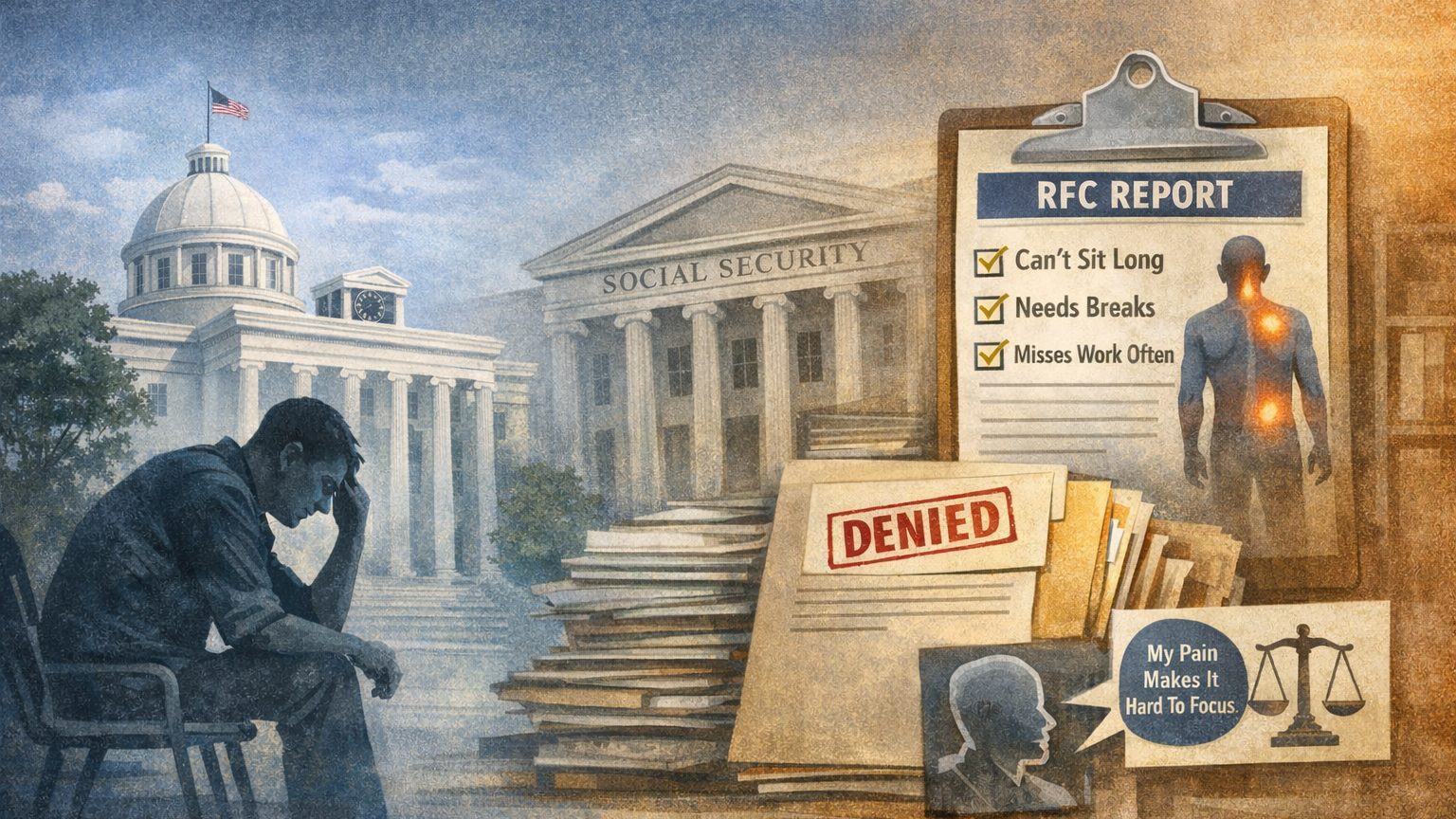
What Is an RFC and Why It Matters So Much
RFC stands for Residual Functional Capacity. It is one of the most important parts of a disability case.
An RFC is the SSA’s statement of what you can still do despite your medical condition. It translates your health problems into real-world work limitations (in the eyes of the SSA).
An RFC can address:
Physical limitations: Sitting, standing, and walking limits Lifting and carrying restrictions Use of hands, arms, and mobility
Mental limitations: Concentration and memory issues Difficulty following instructions Trouble handling stress or workplace interactions
Work consistency issues: Being off-task during the day Needing unscheduled breaks Missing work due to symptoms
Many denied cases improve significantly when a treating doctor or nurse’s medical opinion helps translate your symptoms into the limitations used in the SSA’s RFC — even if no new medical testing is introduced.
What a Doctor or Nurse’s Medical Opinion Can Do That Raw Medical Records Cannot
One of the biggest problems in denied disability claims is that medical records often describe treatment, but not work capacity.
An medical opinion helps bridge that gap.
It connects the dots between your diagnosis and your ability to function in a job. For example, instead of just showing you have chronic pain, it can explain that:
You cannot sit for more than 20–30 minutes at a time
You would need multiple breaks during a workday
You would likely miss several days per month
This type of information is often what decision-makers rely on when determining whether you can realistically maintain employment.
When “No New Evidence” Can Be a Bigger Problem
There are situations where not having updated evidence can make a case more difficult. For example:
- You stopped treatment and there is a long gap in care
- Your records are outdated and do not reflect your current condition
- There is very little documentation supporting your claim
- Your prior denial pointed out missing functional limitations, and that issue was never addressed
Even in these situations, however, it does not necessarily mean you should give up. It may simply mean your case needs a strategy—such as updating key records, strengthening your documentation, or improving how your limitations are presented.
What You Should Do After a Disability Denial in Alabama
1. Read your denial carefully Understand why Social Security denied your claim. Was it based on severity, credibility, or your ability to do other work?
2. Review your existing medical records There may already be strong evidence in your file that was not clearly presented.
3. Focus on functional limitations Your case needs to show not just what condition you have—but what that condition prevents you from doing consistently.
4. Speak with a disability advocate early Before assuming your case is over, it is important to have someone review your situation and identify what can be improved.
Do Not Give Up Just Because You Do Not Have Something “New”
One of the most common mistakes people make after a denial is assuming they cannot win without new medical evidence.
But many disability cases are approved on appeal because the evidence was:
Better organized
More clearly explained
Supported with functional opinions
Presented with stronger testimony
If your claim was denied, that does not necessarily mean you do not qualify. It may simply mean your case was not fully developed yet.
Talk to Disability Alabama Before You Give Up
If you were denied disability benefits in Alabama and think your case is over because you do not have new medical evidence, it may be worth getting a professional review first.
Disability Alabama helps individuals across the state—including Tuscaloosa and surrounding areas—understand whether their existing medical records, testimony, and medical opinion evidence may still support a winning claim.
Before you give up on your benefits, consider reaching out to see if your case can still move forward.