
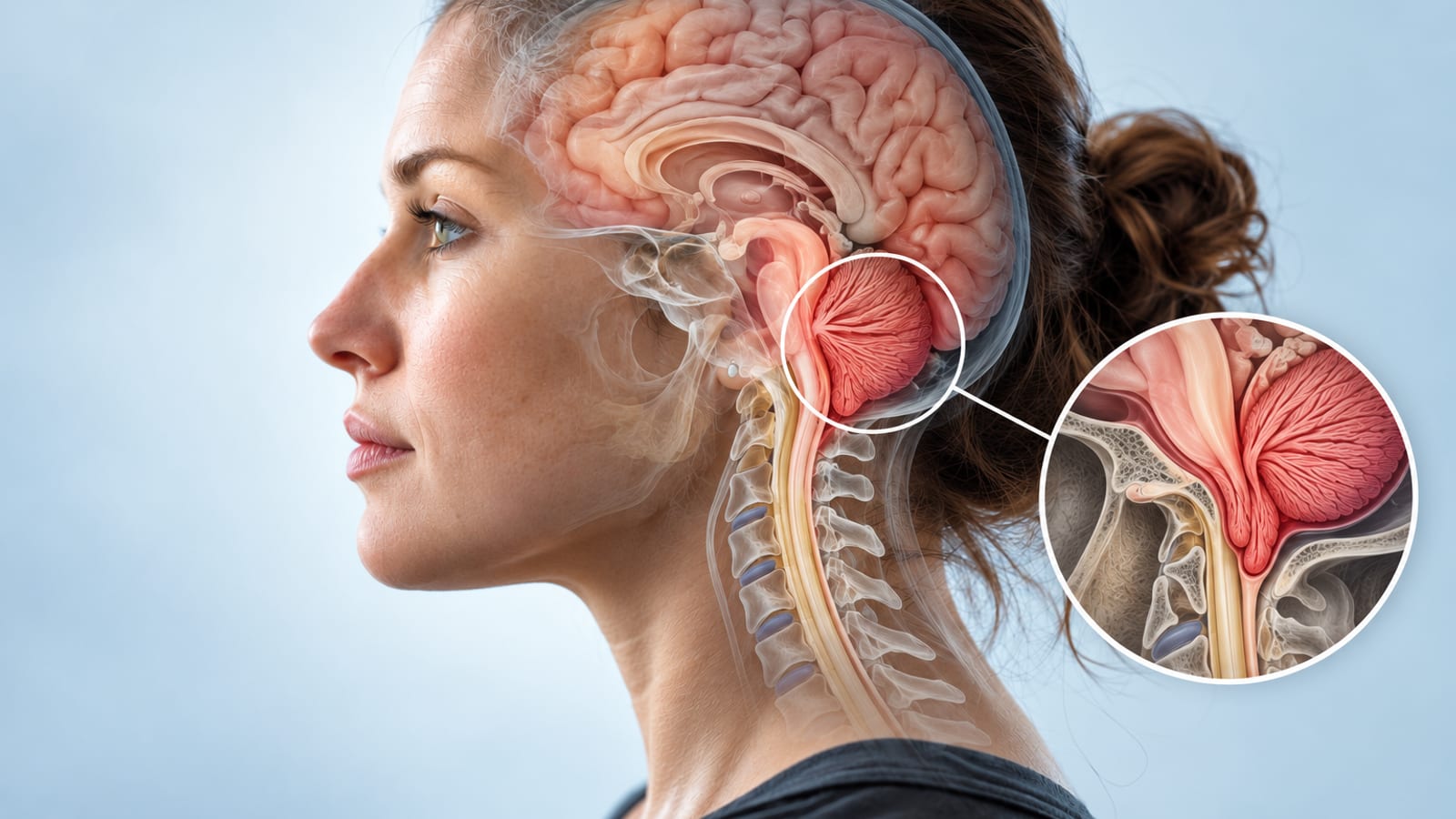
An MRI can show a Chiari malformation. But it cannot necessarily show what it feels like to live with one.
For some people, a Chiari malformation causes few or no symptoms. For others, it can be associated with severe headaches, neck pain, dizziness, balance problems, weakness, numbness, swallowing difficulties, and other neurological symptoms.
That difference matters when applying for Social Security Disability.
Having an abnormal MRI is not the same as proving disability. But being able to walk into a doctor’s office and appear relatively well doesn’t mean you can sustain an eight-hour workday, either.
For people with Chiari malformation, a successful disability claim may depend on making sure Social Security understands what the MRI doesn’t show: how the condition actually affects your ability to function and work.
What Is Chiari Malformation?
Chiari malformation is a neurological condition involving the area where the brain and spinal cord meet. In Chiari, brain tissue extends into the spinal canal because of structural abnormalities involving the skull and brain.
There are different types of Chiari malformation, and symptoms vary considerably from person to person.
According to the National Institute of Neurological Disorders and Stroke (NINDS), headache is a hallmark symptom, particularly following coughing, sneezing, or straining. Other symptoms may include:
- Neck pain
- Dizziness
- Balance problems
- Muscle weakness or numbness
- Difficulty swallowing or speaking
- Vomiting
- Hearing problems
- Ringing in the ears
- Scoliosis
Not everyone with Chiari experiences the same symptoms — or the same degree of impairment. That becomes extremely important in a disability case.
Can You Get Social Security Disability for Chiari Malformation?
Potentially, yes. But a diagnosis of Chiari malformation does not automatically qualify someone for SSDI or SSI.
Social Security’s adult neurological listings do not contain a listing specifically named “Chiari malformation.” Instead, SSA evaluates neurological disorders based on the medical evidence and the limitations produced by the condition.
If a person’s condition does not meet or medically equal a Social Security listing, SSA can assess the person’s Residual Functional Capacity (RFC). Your RFC is essentially an assessment of the most you can still do in a work setting despite your medically determinable impairments.
This is where a Chiari disability claim can become much more complicated than simply submitting an MRI.
The MRI Shows the Condition — Not Necessarily the Disability
Two people can have a Chiari malformation and function very differently. One person may have relatively few symptoms. Another may experience frequent headaches, dizziness, balance difficulties, numbness, weakness, neck pain, or other neurological problems that interfere significantly with daily activities.
That’s why the disability analysis shouldn’t stop at “What does the MRI show?” It also needs to ask: “What does this condition prevent this particular person from doing consistently?”
An MRI can provide important medical evidence. But it doesn’t clock into work for you. It doesn’t explain how frequently you develop headaches, whether dizziness makes standing unsafe, whether neck pain makes it difficult to maintain one position, or whether neurological symptoms interfere with concentration and productivity.
The image may show the anatomy. The rest of the evidence needs to show the limitations.
A Chiari Headache Isn’t Necessarily “Just a Headache”
Headaches are particularly important in Chiari malformation. NINDS identifies headache as a hallmark symptom of Chiari, especially following coughing, sneezing, or straining.
But writing “patient reports headaches” in a medical record doesn’t necessarily explain what those headaches mean for employment. A disability claim may need to answer much more specific questions:
- How often do the headaches occur?
- How long do they last?
- How severe are they?
- What triggers them?
- Do you need to lie down?
- Do light, sound, movement, or computer screens make symptoms worse?
- Can you concentrate during an episode?
- Does medication help?
- Does medication cause side effects?
- How often would a headache interrupt your workday?
- How often would symptoms cause you to miss work?
These details can help transform “I get headaches” into evidence explaining an actual work limitation.
“But You Look Fine” Can Be a Problem With Neurological Disorders
A person with Chiari may walk into an appointment, have a conversation, answer questions, and walk back out. That snapshot does not necessarily tell you what happens during an entire day.
Maybe dizziness comes and goes. Maybe headaches occur several times each week. Maybe prolonged sitting increases neck pain. Maybe balance problems make certain activities unsafe. Maybe numbness or weakness affects the ability to use the hands. Maybe pain or medication makes concentrating difficult.
This distinction is important because Social Security’s own neurological guidance recognizes the importance of whether someone can perform activities consistently and on a sustained basis. Being capable of doing something during a short examination does not necessarily establish that you can do it throughout a normal work schedule.
Can Chiari Malformation Make Even a Desk Job Difficult?
Yes, depending on the person’s symptoms and documented limitations.
People often think of a desk job as physically easy. But sedentary work still requires functioning consistently. A typical job may require someone to:
- Sit for prolonged periods
- Maintain head and neck position
- Look at computer screens
- Use both hands repeatedly
- Concentrate
- Maintain an appropriate work pace
- Communicate with coworkers or customers
- Remain productive throughout the day
- Attend work consistently
Someone experiencing significant headaches, neck pain, dizziness, numbness, weakness, or balance problems may struggle with some of these requirements.
The question isn’t simply “Can you sit at a desk?” It is: “Can you perform the physical and mental demands of that job reliably, throughout the workday and workweek?”
What Evidence Can Strengthen a Chiari Disability Claim?
SSA says neurological claims may require both medical and non-medical evidence. Medical evidence can include medical history, examination findings, relevant testing, imaging, prescribed treatment, and response to treatment.
For someone with Chiari malformation, useful evidence may include:
- MRI and other relevant imaging
- Neurologist or neurosurgeon records
- Detailed neurological examinations
- Headache documentation
- Records describing dizziness or balance problems
- Documentation of weakness or numbness
- Neck pain treatment records
- Medication history and side effects
- Physical or occupational therapy records
- Documentation of swallowing, speech, or other neurological problems when present
- Surgical records when applicable
- Treatment response following surgery
- Workplace accommodations
- Attendance problems
- Statements describing limitations in daily activities
- Medical opinions describing specific work-related restrictions
A headache diary may also help document frequency, duration, triggers, symptoms, treatment, and how individual episodes affect daily functioning.
The goal isn’t simply to prove that Chiari exists. The goal is to document what it does.
What If You Had Chiari Decompression Surgery but Still Have Symptoms?
Surgery does not automatically end the disability analysis. Social Security considers treatment and your response to it when evaluating neurological disorders.
If surgery improves your symptoms substantially, that may affect the claim. But if significant symptoms remain, those limitations still matter. Medical records should clearly document what changed after surgery — and what didn’t. For example:
- Did headaches continue?
- Did dizziness or balance problems remain?
- Are there continuing neurological symptoms?
- Can you now function consistently enough to maintain employment?
The fact that treatment was performed is only part of the story. The resulting level of functioning matters too.
What If Social Security Misunderstood Your Chiari Malformation?
A denial doesn’t necessarily mean that your symptoms aren’t real or that your condition isn’t serious. Sometimes the issue may be how the evidence was evaluated.
- Did the decision acknowledge the MRI but minimize the symptoms?
- Did it focus on a normal finding from one examination without considering symptoms that fluctuate?
- Were headaches adequately evaluated?
- Were balance problems, weakness, numbness, or neck pain considered?
- Were medication side effects addressed?
- Were all medically determinable impairments considered together?
Most importantly: does the RFC actually reflect what you can sustain throughout a normal work schedule? Those are important questions when reviewing a denied Chiari disability claim.
Frequently Asked Questions About Chiari Malformation and Disability
Is Chiari malformation considered a disability?
Chiari malformation can potentially support a disability claim, but the diagnosis alone does not establish disability. SSA evaluates the medical evidence and resulting functional limitations.
Does Chiari malformation have its own Social Security listing?
There is not currently an adult neurological listing specifically titled “Chiari malformation.” SSA may evaluate the resulting neurological impairment under applicable listings and, when a listing is not met or equaled, through the RFC and remaining steps of the disability evaluation.
Can I get disability because of Chiari headaches?
Severe, frequent headaches can contribute significantly to a disability claim when they are medically documented and affect your ability to function. Frequency, duration, associated symptoms, treatment, and work-related effects can all be important.
Can I qualify even if I haven’t had surgery?
Potentially. Surgery itself is not the test for disability. SSA evaluates your medically determinable impairments, treatment history, symptoms, functional limitations, and other relevant evidence.
What if my Chiari was discovered accidentally on an MRI?
An incidental finding alone does not establish disability. The important question is whether medically established impairments cause limitations severe enough to satisfy Social Security’s disability requirements.
Can I get disability after Chiari decompression surgery?
Potentially. If significant medically documented limitations remain after surgery and prevent sustained work, those limitations can still be considered.
What should I do if my Chiari disability claim was denied?
Don’t assume a denial means you cannot qualify. A disability attorney can review whether Social Security properly evaluated your neurological symptoms, medical evidence, treatment response, RFC, and ability to perform past or other work.
When an MRI Doesn’t Tell the Whole Story
Chiari malformation demonstrates something important about Social Security Disability: a medical diagnosis and a person’s ability to work are not the same question.
An MRI may show exactly what’s happening anatomically while saying very little about whether someone can concentrate through a severe headache, maintain balance, sit comfortably, use their hands, manage pain, or reliably complete a workweek.
When the condition is uncommon or poorly understood, clearly connecting the medical evidence to the person’s actual limitations becomes especially important.
If Chiari malformation or other neurological conditions are preventing you from maintaining employment — or your Social Security Disability claim has already been denied — Disability Alabama can help you understand what Social Security considered and whether your claim tells the complete story.
Disability Alabama assists people throughout Alabama with Social Security Disability claims and appeals, including claims involving complex and lesser-known medical conditions.
Before giving up on your claim, let someone who understands the disability process take a closer look.